
Kampala, Uganda – East Africa / March 19, 2026.
 by Administrator
Karamoja, Iran, and the Cost of the Gun
By Counsel Twinobusingye Severino
The recent escalation of hostilities in the Middle East, following the February 28, 2026 military strikes by the United States and Israel on Iran, has once again underscored a familiar truth: where weapons dominate, instability follows. The reported killing of senior Iranian leadership, including Ayatollah Ali Khamenei, triggered swift retaliation, with Iran launching missiles across the Gulf targeting U.S. installations and allied interests in Bahrain, Kuwait, the United Arab Emirates, Saudi Arabia, and Israel.
Since then, the region has descended into deeper crisis. Reports indicate extensive damage to critical infrastructure, including U.S. radar systems, alongside mounting civilian casualties and widespread destruction. The closure of the Strait of Hormuz, through which nearly 20 percent of the world’s crude oil passes, has disrupted global trade and heightened economic uncertainty. Civilians in both Iran and Israel now spend prolonged periods in bunkers, their lives reduced to survival, a reality not unfamiliar to communities in northern Uganda that have endured years in internally displaced persons’ camps.
While the United States and its ally maintain that their objective is to degrade Iran’s nuclear and ballistic missile capabilities, Iran’s response reflects a broader pattern, the projection of military power beyond its borders and the targeting of neighbouring states. It is this posture that invites comparison with a long-standing security challenge closer to home: the Karamoja sub-region.
Karamoja, which became part of present-day Uganda in 1926, remains one of the most marginalised regions despite its vast mineral potential. According to the latest Uganda Bureau of Statistics (UBOS) census and related national surveys, the sub-region has a population of approximately 1.5 million people, with nearly 60 percent constituting the youth. However, social indicators remain stark: about 86 percent of the population has never received formal education, while literacy levels stand at roughly 30.4 percent, far below the national average of 76.1 percent, as reported by UBOS.
Poverty remains deeply entrenched. UBOS data indicates that household poverty levels in Karamoja stand at approximately 72.4 percent, making it the poorest region in the country. Unemployment among the youth is equally alarming, with an estimated 40 percent out of work, many of whom are drawn into cattle rustling and armed violence.
At the heart of this insecurity lies the widespread availability of illegal firearms. Flowing through porous borders with South Sudan, Kenya, and Somalia, and sustained by past regional conflicts, these weapons have entrenched a culture of armed cattle raiding. Young men, commonly referred to as karacunas, often mobilised under the guidance of elders, carry out raids across neighbouring sub-regions of Teso, Lango, Acholi, and Sebei, leaving communities traumatised, displaced, and economically destabilised.
In Kotido District, places such as Napumpum have become synonymous with the planning of these raids, where elders reportedly meet to determine targets. The execution is then carried out by armed youth who traverse long distances, driven by the belief that cattle in neighbouring communities rightfully belong to them.
The parallels with Iran’s regional posture are striking. Just as Iran leverages its military strength and proxy networks to extend influence across Yemen, Lebanon, and Palestine, the possession of arms in Karamoja has emboldened local actors to assert dominance over neighbouring communities. In both contexts, the gun becomes not merely a tool of defence, but an instrument of expansion and control.
However, there is a critical difference, and it offers a pathway forward.
In East Africa, Uganda and Kenya have, since 2002, undertaken joint disarmament efforts aimed at curbing the proliferation of small arms in Karamoja and the North Rift. These initiatives, involving voluntary surrender, coordinated military operations, and cross-border collaboration, have registered measurable progress. Several illegal firearms have been recovered, armed warriors neutralised, and incidents of cattle raiding significantly reduced.
Though challenges remain, including slow implementation and the need for sustained engagement, the gains are beginning to reshape the region’s trajectory.
Karamoja is now witnessing the early signs of transformation. Investment is gradually taking root, particularly in Kotido District, long considered the epicentre of cattle rustling. Among the most notable initiatives is the proposed Karamoja Peace and Technology University (KAPATU), a multi-stakeholder project involving the Catholic Lawyers Society International (CLASI), the Kotido Catholic Diocese, and the Government of Uganda. Conceived in 2014 following extensive research, the initiative recognises education as the most viable pathway to long-term socio-economic transformation. Efforts are underway to secure a provisional licence from the National Council for Higher Education, marking a significant step towards reshaping the future of the region.
The lesson is clear.
Where weapons proliferate unchecked, whether in the Middle East or Karamoja, insecurity becomes cyclical, spilling across borders and generations. But where deliberate efforts are made to disarm, educate, and invest, the cycle can be broken.
As the world watches tensions escalate in the Gulf, Uganda’s experience offers an important reminder: sustainable peace is not built on military might alone, but on inclusive development, access to education, and the deliberate dismantling of the structures that sustain violence.
The gun may instil fear, but it is opportunity, grounded in knowledge and equity, that secures lasting peace.
The writer is Chairperson KAPATU-Council.
ABOUT KAPATU
KAPATU is a Nucleus National Public University established jointly by the Roman Catholic Dioceses of Kotido and Moroto, the Catholic Lawyers Society International (CLASI), headed by its president, Counsel Severino Twinobusingye, and the government of Uganda. Its main campus is situated at Losilang, Kotido municipality (Karamoja). The initiative aims to foster peace and sustainable development in the region through education.
It was conceived in 2014 but actualised on 29th April, 2023, in a colourful ceremony at Nsambya presided over by the Vice President of Uganda, H.E. Maj. Jessica Rose Epel Alupo, who represented H.E. the President. The KAPATU project is being overseen by a Strategic Leadership Committee comprising President Yoweri Kaguta Museveni (Chair/Founding Chancellor), Vice President Jessica Rose Epel Alupo (Founding Deputy Chancellor), and First Lady, also Minister for Education and Sports, Maama Janet Kataha Museveni.
The government has, in the FY2025/26, allocated Shs180bn for the university’s establishment following a special cabinet sitting on 16th December 2024, chaired by H.E. the President and also attended by H.E. the Vice President.
by AdministratorKaramoja’s Unfinished Promise: Neglect, Bureaucracy and the Cost of Delay
Kampala, Uganda – East Africa / March 4, 2026.
By Counsel Twinobusingye Severino
In 1963, shortly after visiting Karamoja, Prime Minister Milton Obote is widely quoted as having remarked: “We shall not wait for Karamoja to develop.” Whether apocryphal or not, the sentiment has lingered for six decades, not always in words, but often in attitude.
Today, Karamoja remains one of Uganda’s most paradoxical regions: rich in (natural) endowment (especially mineral wealth, rich soils, etc.), culture and human potential, yet endemically stuck at the bottom of all major national development indicators. With a population estimated at 1.5 million by the UBOS last census, it still struggles with limited access to quality education, healthcare, modern agriculture, and infrastructure. Over six decades since independence, Karamaja remains, to many Ugandans, less a part of this nation, having failed to integrate fully both in the national conscience and planning. For many Ugandans, Karamoja appears less like a fully integrated region of the Republic and more like a neglected frontier.
The question that refuses to go away is this: Is Karamoja’s stagnation a result of chronic national neglect, or of individual attitudes that quietly resist its transformation?
Transformation Requires Alignment
History shows that regional transformation, particularly in Africa, is neither accidental nor instantaneous. It requires political will at the highest levels, policy coherence across institutions, and regulatory frameworks that enable rather than obstruct investment.
When the Executive, Cabinet, Legislature, and regulatory bodies align around a shared development vision, the private sector, the fifth and indispensable actor, follows. Where they do not, progress stalls.
Karamoja’s story reflects both effort and frustration. Successive governments have launched multi-million-dollar initiatives to improve security, livelihoods, and infrastructure. President Museveni’s administration has invested heavily in disarmament, roads, schools, and social protection programmes. Yet the region’s gains have often been diluted by mismanagement, corruption, and bureaucratic inertia.
Good intentions have too frequently collided with weak implementation.
Education as the Long-Term Equaliser
In 2014, the Catholic Lawyers Society International (CLASI) conducted research in Karamoja to assess its structural challenges and long-term prospects. One conclusion stood out: sustainable transformation must be anchored in education.
From that research emerged the vision of the Karamoja Peace and Technology University (KAPATU), an institution intended to address not only academic gaps but also the region’s unique socio-economic realities. The initiative brought together CLASI, the Kotido Catholic Diocese, and the Government of Uganda in a rare multi-stakeholder partnership.
In April 2023, the project was formally unveiled at a ceremony presided over by President Museveni, represented by Vice President Jessica Alupo. Three months later, the foundation stone was laid at Losilang in Kotido Municipality. In 2024, the National Council for Higher Education (NCHE) granted a Letter of Interim Authority, allowing promoters to recruit staff, establish administrative structures and mobilise resources ahead of full licensing.
By December 2025, NCHE officials visited Losilang to assess the university’s application for a Provisional Licence to admit students.
The symbolism of those milestones cannot be understated. For a region long associated with conflict and marginalisation, the establishment of a university is not merely an educational project; it is a statement of inclusion and a cornerstone to real empowerment and equalisation.
The Bureaucracy Question
Funding and political goodwill have not been the primary challenge. Support has come from across government and faith-based institutions. Yet progress has been slowed by procedural caution within sections of the bureaucracy, particularly in regulatory and legal approval processes.
To be clear, regulatory compliance matters. Institutions of higher learning must meet established standards. But there is a delicate balance between due diligence and excessive rigidity.
Karamoja’s circumstances are not identical to those of Kampala or Mbarara. Regions that have endured decades of insecurity and underinvestment require responsive, context-sensitive decision-making. When procedure becomes detached from purpose, it risks undermining the very transformation it seeks to safeguard.
During a visit to the proposed main campus at Losilang in December 2025, the National Council for Higher Education (NCHE) team had the opportunity to see firsthand the context in which this university is being established. For many members of the delegation, it was their first time in Karamoja — and in Kotido in particular. Physical presence, more than briefing papers or compliance files, has a way of sharpening perspective.
The visit underscored the urgency and relevance of establishing the institution, not as an abstract policy proposal, but as a lived necessity. It also highlighted the broader ecosystem that supports the project, including the extended network of facilities across the region that form part of its enabling infrastructure, though these were not fully toured during the visit.
Sometimes, it is only by standing on the ground, seeing the distance, the terrain, the unmet demand, that the developmental case becomes unmistakable.
The writer is the President of Catholic Lawyers Society International (CLASI) and Chair of KAPATU Council.
ABOUT KAPATU
KAPATU is a Nucleus National Public University established jointly by the Roman Catholic Dioceses of Kotido and Moroto, the Catholic Lawyers Society International (CLASI), headed by its president, Counsel Severino Twinobusingye, and the government of Uganda. Its main campus is situated at Losilang, Kotido municipality (Karamoja). The initiative aims to foster peace and sustainable development in the region through education.
It was conceived in 2014 but actualised on 29th April, 2023, in a colourful ceremony at Nsambya presided over by the Vice President of Uganda, H.E. Maj. Jessica Rose Epel Alupo, who represented H.E. the President. The KAPATU project is being overseen by a Strategic Leadership Committee comprising President Yoweri Kaguta Museveni (Chair/Founding Chancellor), Vice President Jessica Rose Epel Alupo (Founding Deputy Chancellor), and First Lady, also Minister for Education and Sports, Maama Janet Kataha Museveni.
The government has, in the FY2025/26, allocated Shs180bn for the university’s establishment following a special cabinet sitting on 16th December 2024, chaired by H.E. the President and also attended by H.E. the Vice President.
by AdministratorKaramoja’s Structural Challenges and the Imperative for the KAPATU Project
Kampala, Uganda – East Africa / February 14, 2025.
By Counsel Twinobusingye Severino
The story of burying the pen and the book at Lomukura in Karamoja remains one of the most symbolic narratives in the region’s educational history. It reflects a deep-rooted tension between the promise of formal education and the painful experiences associated with colonial administration.
At the time, the elders of Karamoja were divided. One group supported the introduction of formal education for their children, while another strongly opposed it. Those opposed associated the pen and the book with colonial exploitation. They accused colonial authorities and their local agents of using the pen to conscript their children into foreign wars from which many never returned, while the same instrument was used by tax collectors to impose harsh and burdensome taxes on the local population.
As a result, the more radical elders resolved to bury the pen and the book at Lomukura in Kotido Municipality, treating them as symbols of oppression and collective suffering. Although a small number of families secretly sent their children to schools in Moroto District and Ngora in the neighboring Teso sub-region, the overwhelming majority of elders rejected formal education.
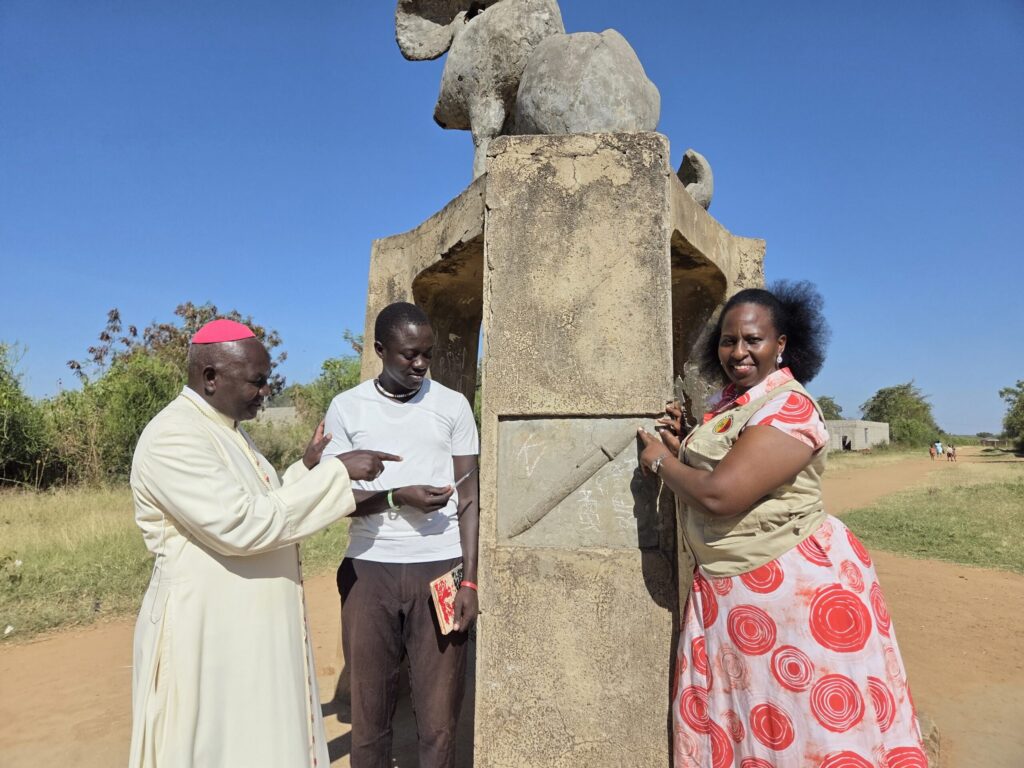
The KAPATU President, and also the Bishop of Kotido Catholic Diocese, Rt. Rev. Dominic Eibu MCCJ, together with the Deputy Vice Chancellor-Academic Affairs Prof. Annette Kezaabu, during a visit to Namejio Community Kraal School (NACOKS) and Akurun Akaalam monument in Lomukura village, Kotido Municipality, the site where elders from Karamoja unearthed the pen
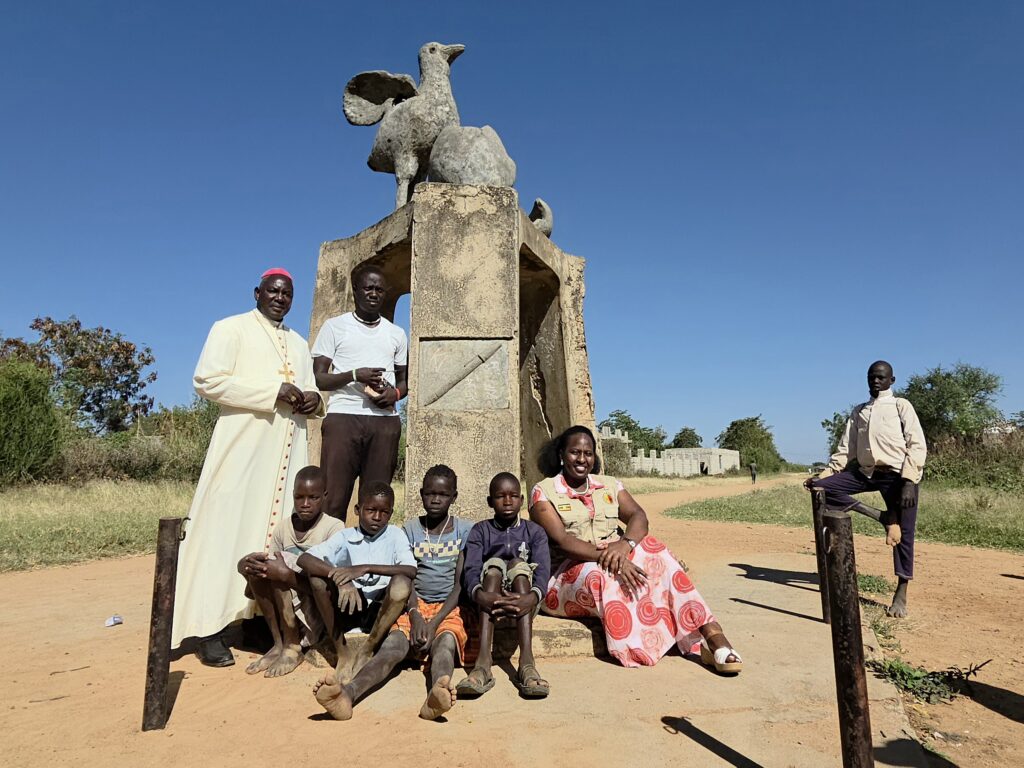
The KAPATU President, and also the Bishop of Kotido Catholic Diocese, Rt. Rev. Dominic Eibu MCCJ, together with the Deputy Vice Chancellor-Academic Affairs Prof. Annette Kezaabu, during a visit to Namejio Community Kraal School (NACOKS) and Akurun Akaalam monument in Lomukura village, Kotido Municipality, the site where elders from Karamoja unearthed the pen
Nearly six decades later, a significant turning point emerged. On 5 November 2003, the First Lady of Uganda, now Minister for Education and Sports, Hon. Janet Kataaha Museveni, presided over a historic ceremony at Lomukura during which the elders formally unearthed the pen and the book. This act symbolically reopened the path for education to take root in Karamoja.
A monument was erected to commemorate this milestone, marking a new era in the region’s transformation journey. Around this site, the local community established a makeshift community school where children gather after returning from herding cattle to acquire basic literacy and numeracy skills. However, despite operating for several years and enrolling significant numbers of learners, this school remains unrecognized by government authorities. It lacks basic infrastructure, including classrooms and sanitation facilities, highlighting the persistent gap between community initiative and state support.
The mere existence and sustained attendance of this community school is a clear testament to the profound shift in attitudes toward education among the Karimojong. It demonstrates that the community is now ready to fully embrace education as a pathway to development.
Nevertheless, education in Karamoja continues to face severe structural challenges. The sub-region records the lowest literacy rate in Uganda, at 30.4%, compared to the national average of 76.1%. School dropout rates remain high, compounded by poor infrastructure, chronic hunger, child labour in mining activities, and deeply entrenched cultural preferences for pastoralism. Although cattle rustling has historically exacerbated insecurity, the Resident District Commissioner of Kotido, Mr. Charles Ochogor, has confirmed that the area is now largely peaceful and poised for development.
Available research further indicates that more than 50% of children aged between 6 and 24 in Karamoja have never attended school, while approximately 86% of the youth population lacks any formal education. Youth unemployment exceeds 40%, affecting the most productive age group, which constitutes nearly 60% of the region’s population. This situation has fueled cycles of violence and social instability. Poverty levels in Karamoja remain the highest nationally, standing at 74.2%.
Equally concerning is the large proportion of extremely idle youth, estimated at between 60% and 68%, who are neither employed, enrolled in education, nor engaged in formal training or skills development. This represents a significant loss of human potential and a critical development challenge.
In light of these realities, only a holistic and transformative intervention can adequately address Karamoja’s development deficit. According to Dr. Robert Limlim, Head of the Karamoja Professionals Association, the sub-region suffers from long-standing underdevelopment driven by limited access to skills, knowledge, and institutional capacity. He argues that Karamoja urgently requires a comprehensive and sustainable solution.
It is within this context that the establishment of the Karamoja Peace and Technology University (KAPATU) must be understood. The official unveiling of the KAPATU project on 23 November 2025 at Losilang, Kotido Municipality, by His Excellency the President of Uganda, represented by the Rt. Hon. Amama Mbabazi SC marked a decisive response to these challenges. KAPATU is envisioned as a transformative institution capable of addressing the structural roots of Karamoja’s underdevelopment.
KAPATU is a tripartite initiative involving the Catholic Lawyers’ Society International (CLASI), chaired by Counsel Twinobusingye Severino, who also serves as Chairperson of the KAPATU Council; the Kotido Catholic Diocese, led by Rt. Rev. Dominic Eibu MCCJ, who is also the KAPATU President, and the Government of Uganda.
The idea for KAPATU was conceived in 2014 following extensive research conducted by CLASI, which revealed a significant socio-economic and educational gap between Karamoja and the rest of the country, necessitating a holistic institutional response. In April 2023, the concept was formally operationalised when His Excellency the President, represented by Her Excellency the Vice President, Maj. Jessica Alupo, officially launched the project at the Uganda Episcopal Conference headquarters in Nsambya. This was followed by a groundbreaking ceremony at Losilang in July 2023, paving the way for the project’s formal unveiling in November 2025.
The local community regards KAPATU as a strategic anchor institution capable of driving socio-economic transformation, fostering peace, and promoting regional stability. Notably, on 16 December 2025, the National Council for Higher Education (NCHE) conducted an inspection visit to KAPATU’s main campus at Losilang to assess its readiness to commence academic operations. The process toward the grant of a provisional license is currently underway, representing a major milestone in the realisation of Karamoja’s educational and developmental aspirations.
Through KAPATU, Karamoja stands on the threshold of a new chapter—one defined not by marginalisation, but by opportunity, skills development, peace, and sustainable transformation through education.
The writer is the Chairperson Council-KAPATU.
ABOUT KAPATU
KAPATU is a Nucleus National Public University established jointly by the Roman Catholic Dioceses of Kotido and Moroto, the Catholic Lawyers Society International (CLASI), headed by its president, Counsel Severino Twinobusingye, and the government of Uganda. Its main campus is situated at Losilang, Kotido municipality (Karamoja). The initiative aims to foster peace and sustainable development in the region through education.
It was conceived in 2014 but actualised on 29th April, 2023, in a colourful ceremony at Nsambya presided over by the Vice President of Uganda, H.E. Maj. Jessica Rose Epel Alupo, who represented H.E. the President. The KAPATU project is being overseen by a Strategic Leadership Committee comprising President Yoweri Kaguta Museveni (Chair/Founding Chancellor), Vice President Jessica Rose Epel Alupo (Founding Deputy Chancellor), and First Lady, also Minister for Education and Sports, Maama Janet Kataha Museveni.
The government has, in the FY2025/26, allocated Shs180bn for the university’s establishment following a special cabinet sitting on 16th December 2024, chaired by H.E. the President and also attended by H.E. the Vice President.
Meanwhile, in her remarks, Prof. Biira explained that for NCHE to have come to Losilang, it was a testament that the Council received KAPATU’s Application for a License proposing a number of programs, the objectives and aims for which the University is being formed in addition to the academic facilities in place among others.
“Today is my first time to be in Karamoja and I now understand why we need this university and I think it’s the right time that we have this vision bear the fruits. So, we are here to celebrate the unearthing of the Pen. We urge you to give us the necessary information so that we write a report and forward to NCHE that is going to put the final nail” she said.
Prof. Biira said the team was impressed with the level of preparedness at KAPATU noting the availability of necessary Human resource already in place even before the University begins. She urged the management, Staff and Deans who have decided to be part of KAPATU to stay forever so that their report can stand a test of time.
The team was also impressed with availability of land to allow future expansion, noting that in other universities, they are a one-stop center with industries and innovation centers within the university.
“So, because you have land, this is also possible,” she said. Other areas of excellent score according to the team’s assessment included land ownership, ready policies in place, availability of infrastructure including library, computer lab, offices, availability of utilities, certificates of occupancy, Partnership MoUs, Mobilization of necessary financial support to sustain the university, human resource and academic programs. The team however, recommended some areas of improvement including engraving of KAPATU property for proof of ownership, separation of governance and management structures to avoid micro-management and recruitment of more core staff to run the proposed programs.
In his closing remarks, Bishop Eibu described the visit as historic, noting that the day shall remain in the books for years to come.
ABOUT KAPATU
KAPATU is a Nucleus National Public University established jointly by the Roman Catholic Dioceses of Kotido and Moroto, the Catholic Lawyers Society International (CLASI), headed by its president, Counsel Severino Twinobusingye, and the government of Uganda. With its main campus situated at Losilang, Kotido municipality (Karamoja). The initiative aims to foster peace and sustainable development in the region through education.
It was conceived in 2014 but actualised on 29th April, 2023, in a colourful ceremony at Nsambya presided over by H.E. the Vice President, Maj. Jessica Alupo, who represented H.E. the President. The KAPATU project is being overseen by a Strategic Leadership Committee comprising President Yoweri Kaguta Museveni (Chair/Founding Chancellor), Vice President Jessica Alupo (Founding Deputy Chancellor), and First Lady, also Minister for Education and Sports, Maama Janet Kataha Museveni.
The government has, in the FY2025/26, allocated Shs180bn for the university’s establishment following a special cabinet sitting on 16th December 2024, chaired by H.E. the President and also attended by H.E. the Vice President.
 by Administrator
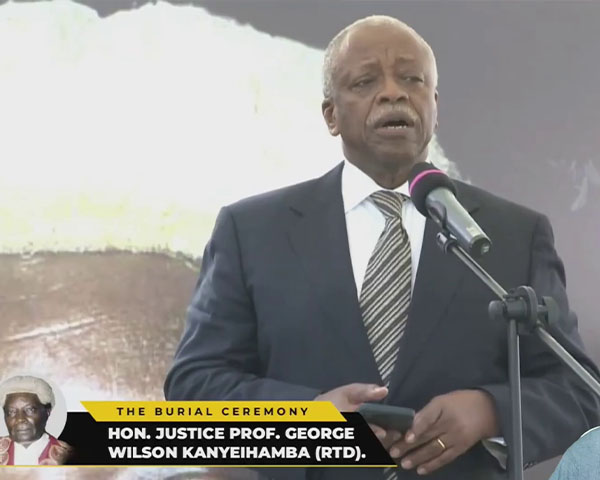
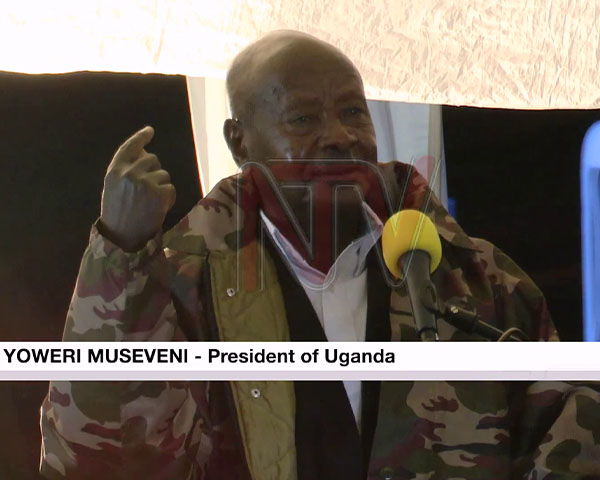
Amama Mbabazi speaks out his pain at Prof George Wilson Kanyeihamba’s burial – NTV
Kampala, Uganda – East Africa /July 29, 2025
Amama Mbabazi speaks out his pain at Prof George Wilson Kanyeihamba’s burial.
 by Administrator
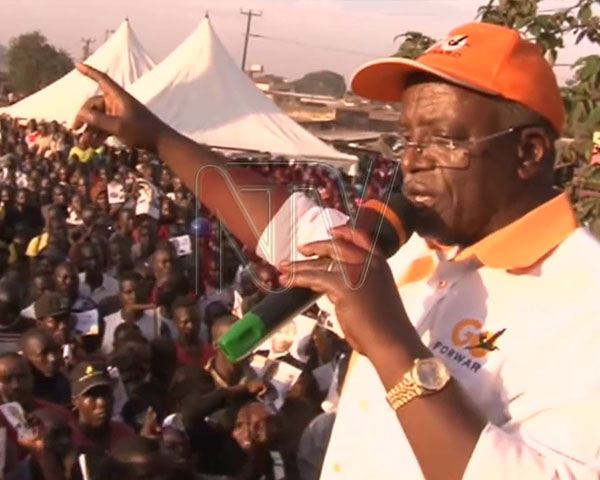
Museveni lauds Amama Mbabazi at golden anniversary – NTV
Kampala, Uganda – East Africa /April 7, 2024
President Museveni has implored the youth in the country to embrace patriotism and Pan-Africanism as part of their development path. He made the call during a reception to mark the 50th wedding anniversary of the former prime minister Amama Mbabazi and his wife Jacqueline Mbabazi at Serena Hotel in Kampala. The event brought together top government officials and religious leaders. #NTVNews #NTVTonight #NTVWeekendEdition
 by Administrator
What does Amama Mbabazi’s return to the fold mean? | PANORAMA – NTV
Kampala, Uganda – East Africa /February 28, 2021
Amama Mbabazi, has in principle agreed to work with his former bush war comrade, President Museveni, after a bitter fallout in 2014 when the former Prime Minister and NRM Secretary-General was sacked. What does his return to the NRM fold mean in the post 2021 election period where government continues to face criticism from Western powers? #NTVNews #NTVTonight #NTVWeekendEdition
 by Administrator
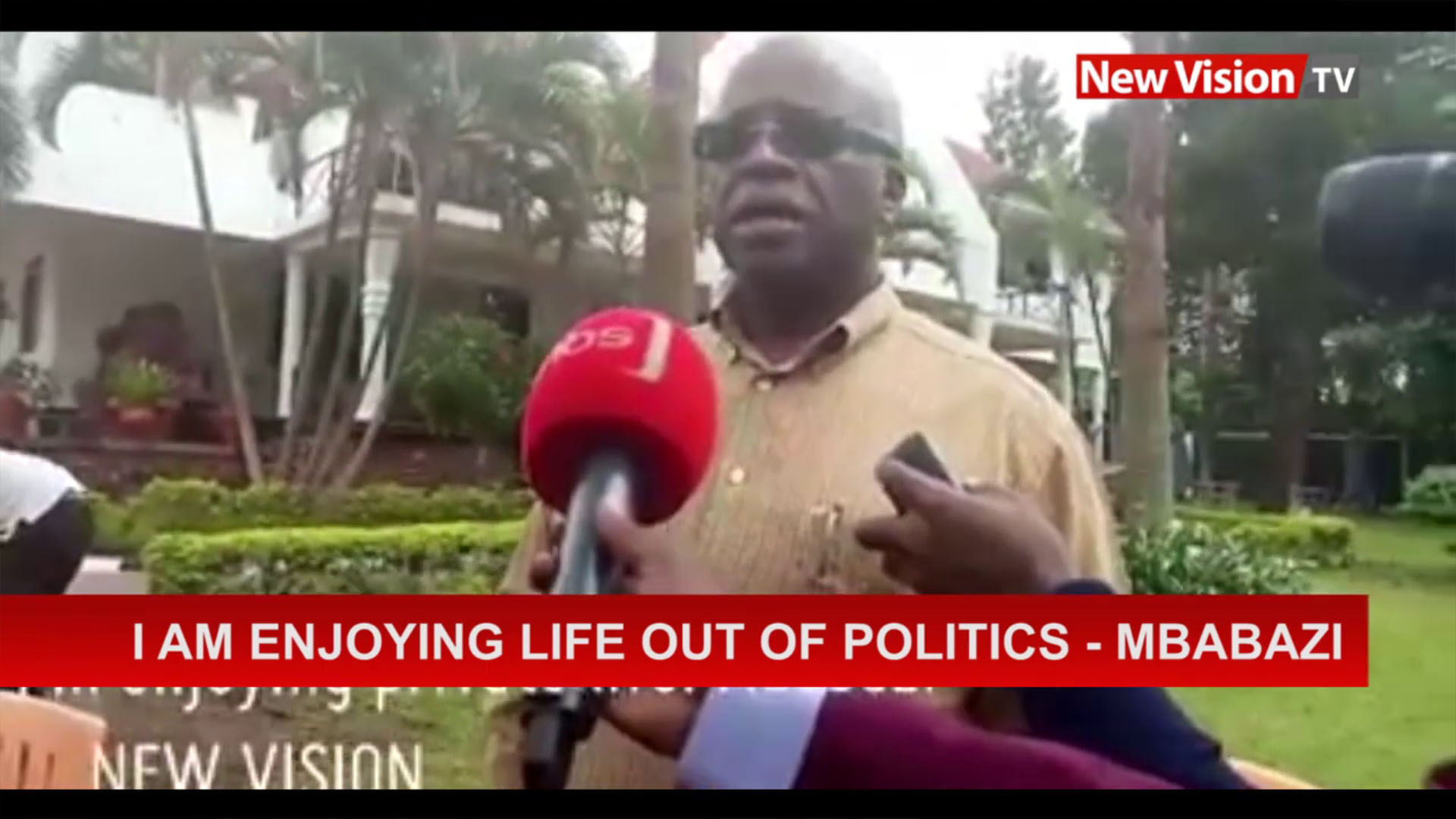
I am enjoying life out of politics – Mbabazi – NEW VISION TV
Kampala, Uganda – East Africa /May 16, 2018
Former presidential candidate Amama Mbabazi is enjoying life outside politics. New Vision TV offers analyzed news content on trending stories in Uganda, be it politics, business, and the day today life This is broadcast in various shows such as The daily News bulletin, the hourly news updates, the business show called The Handshake and Music News show. Since Uganda is known as the Pearl of Africa, New Vision TV has a show that broadcasts Uganda’s beauty called the Pearl of Africa.